
- News
- City News
- bengaluru News
- Neighbourhood tales get stored for posterity
Trending
This story is from June 19, 2016
Neighbourhood tales get stored for posterity
Anyone could challenge Gunboat Jack to a bout in those days. So did young Koshy Oommen, fresh from earning his boxing champion title from Bishop Cotton school. But beating Jack, the strapping American ex-soldier and stuff of boxing legends, wasn't easy, in the 1940s.
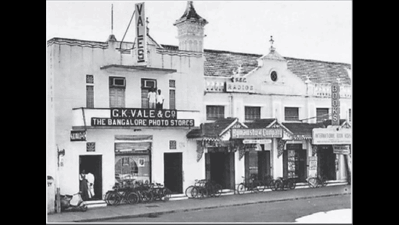
Timeless tales: Residents were interviewed for an oral history project in areas like MG Road with its iconic shops such as GK Vale and the now-defunct Plaza Theatre. (TOI photo)
You Can Also Check: Bengaluru AQI | Weather in Bengaluru | Bank Holidays in Bengaluru | Public Holidays in Bengaluru | Gold Rates Today in Bengaluru | Silver Rates Today in Bengaluru
Who said history is written by victors alone? A few historians are listening to stories like these told by ordinary denizens of Bengaluru to create a parallel archive of memories to complement dusty gazettes and tomes. The Bangalore Storyscapes project has a little over 30 such stories and anecdotes from visitors and residents of Malleswaram and MG Road collected since 2012. Now, historians from Centre for Public History (CPH) at Srishti Institute of Art, Design and Technology are documenting the oral history of Ulsoor and Basavanagudi.Losing past:Oral history is a method of collecting, archiving and interpreting the voices and memories of people. In India, there is a need to speak to people as their experiences have not been recorded. "The US and Europe have been archiving oral history ever since the tape-recorder was invented," says professor Indira Chowdhury, director of CPH. "We have missed talking to one generation about their experience of growing up in colonial India and the transition into independent India. Oral history is important because we have been lax in putting together the archives of contemporary history," says Professor Chowdhury, who is part of a team organising the 19th International Oral History Conference from June 27 to July 1 here.Unlike formal historical studies, oral history gives space to diverse voices. Avehi Menon, curator at CPH, and her colleagues seek life stories of participants through interviews. Often, personal stories tend to intersect with larger historical events. "It is this lived experience and memory of the past that we wish to engage with," says Menon.The current project started in the city with interviews of scientists at NCBS and later at Malleswaram. Professor Chowdhury and team connected with elders of Nightingales Elders' Enrichment Centre in Malleswaram to know the area better.Soon, the historians turned their attention to MG Road with its old family establishments and iconic eateries.The first port of call are the 'gatekeepers' of the neighbourhood, especially those who have been in an area for generations. "The rest is a sort of snowball effect, people share contacts of people they know and we connect with them," says Menon.Memories linger:The approach varies in each area. In an old commercial hub like MG Road, stories were mostly memories of shops and cafes, from Indian Coffee House to erstwhile Plaza Theatre. In Basavangudi, which was designed to house various com munities, people remembered making friends in multi-cultural schools and celebrating Independence with relatives. "The place has a different culture from Cantonment," says Menon.The process of collecting history through memories makes it a subjective exercise. "More than the location, it is the memory of that space that lingers," says Menon. For instance, going for ice cream to Lakeview was an important ritual after a movie or on a first date. Plaza might have been demolished but it is still on top of the mind for someone who has seen 'Ten Commandments' five times. Koshy's was the place to be seen rubbing shoulders with Britishers.Then there was the curious case of 3-Aces, which meant different things to different people. "It is no longer there on MG Road but according to people, it used to be a bar, a club, a dance bar, a cabaret," says Menon. They all agreed on one thing: it was a dimly lit exclusive place where one went to dance without telling parents. "It seemed like there was a sense of forbidden about it and it looks like a happening night club became a cabaret," says Menon.When some of these stories became complementary audio commentary for a city walk, the results were interesting. Maya Hemant Krishna, a community manager at a publishing house, found herself in an alley to find an old theatre off MG Road. "While a walk down Brigade road amounts to shopping and eating these days, there was a time when Italian prisoners walked down the same street to shop."The Italians, who were allowed to shop only from certain stores, were not an oddity. Their presence brought the reality of World War to cosmopolitan Cantonment. Independence was about marching around leafy Basavanagudi with tricolour for one interviewee. Another associated the Partition with the arrival of Sindhis in her neighbourhood.The exercise makes one question notions about identity. A Tamil Kannadiga Christian from Basavanagudi told Menon that she had more in common with Brahmins in her neighbourhood than fellow Christians in Cantonment. "It is an interesting point when you think about who is a Bangalorean," she says.Stay updated with the latest local news from your city on Times of India (TOI). Check upcoming bank holidays, public holidays, and current gold rates and silver prices in your area.
End of Article
Follow Us On Social Media











Photostories
Hot Picks
Top Trending
Explore Every Corner
Across The Globe
Wayne GretzkyRoblox shutdownAndy RoddickDevin HaneyVanessa BryantRussell WilsonTravis KelceTaylor SwiftBrooke HoganThe UndertakerBrittany MahomesOnline Gaming BillJohn Cena RetirementMitch MarnerTrish Stratus MotherIlona MaherGabrielle UnionBrian SchottenheimerFortnite NITE Unite Marksman SkinNikki HaleyKylie KelceUS Sanctions IndiaDwyane WadeTN NEET UG Round 1Nayara EnergyTexas Congressional MapsNIRF RankingsTen CommandmentsTulsi GabbardPam Bondi
Hot on the Web
Beautiful Pet BirdsUSFDA Cookware WarningDhanashree VermaShah Rukh KhanMagnesium Deficiency SymptomsHigh Blood Sugar SymptomsVitamins For Hair GrowthBelly Fat LossHeart AttackCancer RisksReverse Fatty LiverOzempic Vulva Side EffectsSleeping TipsBharti SinghGarlic Health BenefitsBrain-Eating Amoeba SymptomsSu From So OTT ReleaseAquarium Setup TipsLongest International RiverPooja BediAngelina JolieYuzvendra ChahalBoney KapoorRajnikanthSunita GogoiTaj Mahal Restricted ChambersWar 2 Box Office CollectionCoolie Movie ReviewCoolie Box Office CollectionOvercrowded Tourist DestinationsAshwagandha For MenColon Cancer SymptomsHigh Protein FoodsKidney Stone PainHigh Cholesterol SymptomsLakshman BootiColorectal CancerOral SymptomsReduce Face Fat DietSide Effects Of BananasGinger Tea Side EffectsKidney Damage Symptoms
Trending Topics
Harrison PhillipsOnline Gaming Bill Key PointsPradhan Mantri Viksit Bharat YojanaTaylor SwiftHardik PandyaCSIR NET ResultDME MP NEET UGNEET PG ResultIBPS Clerk RecruitmentDU CSAS UGShubman GillSanju SamsonPrithvi ShawVinod Kambli BrotherBPSC DSO Answer KeyKarnataka UGCET 2025Heinrich KlaasenJAC Chandigarh CounsellingAjinkya RahaneDelhi Triple MurderNora FatehiKrishna River FloodMumbai BEST Election ResultRekha Gupta AttackedDelhi CM Attack CaseDelhi School Bomb ThreatRahul MamkootathilRekha Gupta InjuriesAhmedabad Student MurderBigg Boss 19Mustafa SuleymanEpic CEO FaulknerCoconut Water For Kidney PatientsApple iPhone 17Bill GatesIBM and NASA Unveil SuryaKairan QuaziNyt ConnectionsStarlink To Use AadhaarOpenai Cfo Sarah FriarGoogle Pixel 10 Pro FoldWordle Today
Popular Categories
HeadlinesSports NewsBusiness NewsIndia NewsWorld NewsBollywood NewsHealth+ TipsIndian TV ShowsTechnologyTravelEtimesHealth & FitnessNFLAugust Long Weekend 2025India vs EnglandAstrologyWeather TodayPlatinum Rate TodaySilver Rate TodayGold Rate TodayIs Bank open todayIs Bank Open TomorrowBank Holidays in AugustPublic Holidays in AugustStock Market HolidaysFinancial CalculatorsTechnology NewsInternational SportsPublic HolidaysBank Holidays
Latest News
Dharmasthala mass burial row: Court grant anticipatory bail to YouTuber Sameer MD; faces charges over AI videoMicrosoft shuts down Chinese companies' early access to…Dwyane Wade and Gabrielle Union Split on How Angel Reese Shapes Daughter Kaavia’s Dreams: "There's the Gab Way and There's the Other Way!"'Silence emboldens bully': China targets Trump's tariffs; 'firmly' stand with IndiaKylie Kelce backs Taylor Swift’s viral ‘male sports fans’ line, calls it ‘one of the most badass things’'Will never abandon Delhi': CM Rekha Gupta to hold Jan Sunwais in every constituency; says 'accidents happen'Lewis Hamilton’s fans can’t keep calm as his dog Roscoe graces magazine cover, F1 star reveals “He likes fancy sneakers”How to get the NITE Unit Marksman skin in Fortnite for free?Shell launches Helix Ultra in India: 1.8% power boost, 3.4% better response for your carUS market today: Wall Street slips as Walmart drags S&P 500 toward fifth straight loss, Jerome Powell speech in focusAll about Saath Nibhana Saathiya's Gia Manek aka Gopi Bahu's partner Varunn Jain: From on-screen brother-in-law to real-life husbandMudassar Aziz’s new comedy ‘Zamana Kya Kahega’ to star Taapsee Pannu, Fardeen Khan and Ammy Virk - ReportDon’t ignore painless lumps: How sarcoma differs from breast, lung, and colon cancer5 people who should avoid walnuts: Health risks you need to knowIndia-Russia ties: EAM Jaishankar meets President Vladimir Putin'Bright MPs, insecure leadership': PM Modi's dig at Rahul Gandhi as Monsoon session ends in deadlock - ReportAsia Cup: Where does Shubman Gill's elevation as T20I vice-captain leave Hardik Pandya in captaincy race?India–Japan ties: Tokyo set to unveil 10 trillion yen investment plan; announcement expected during PM Modi’s trip
Copyright © 2025 Bennett, Coleman & Co. Ltd. All rights reserved. For reprint rights: Times Syndication Service